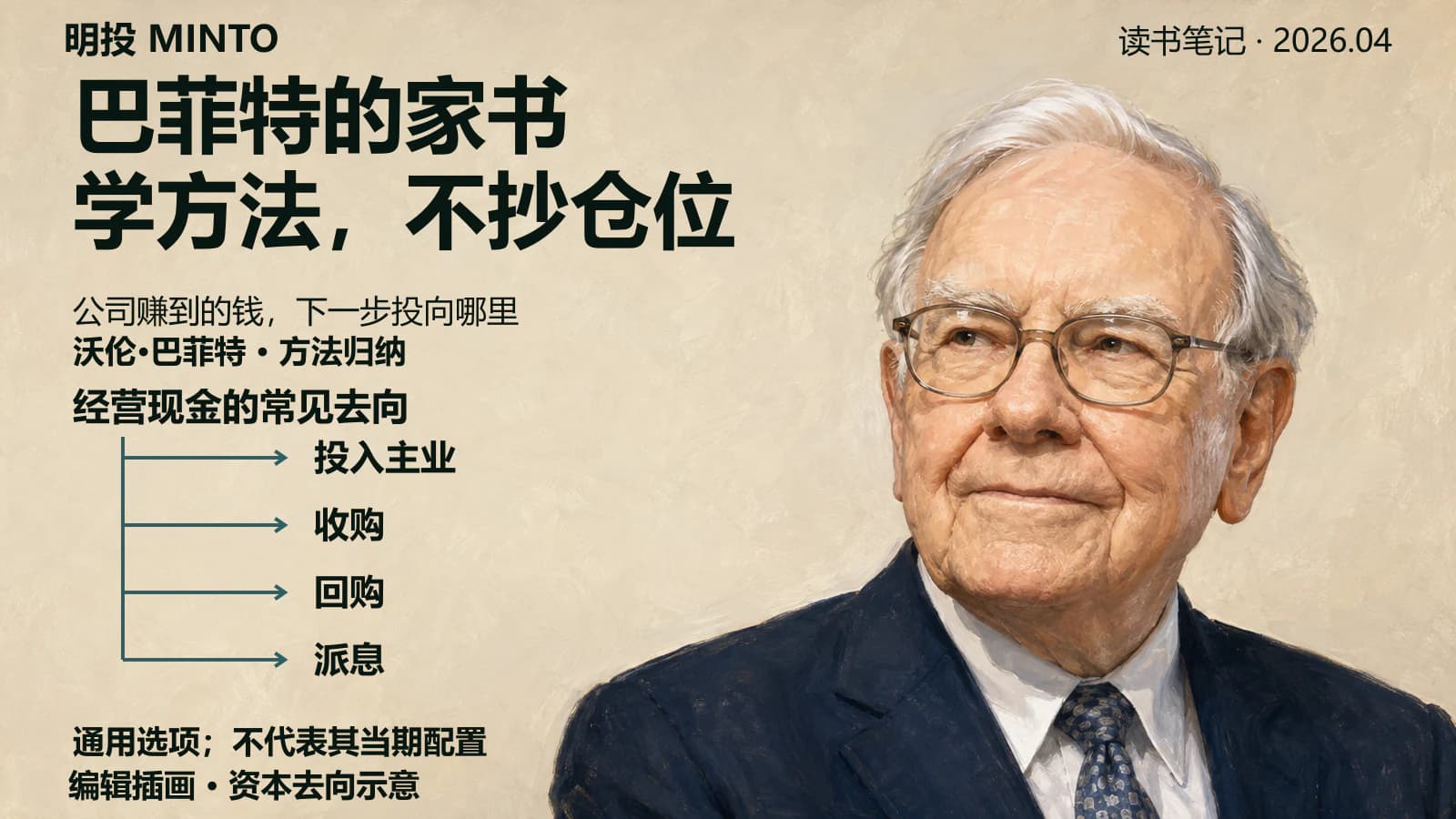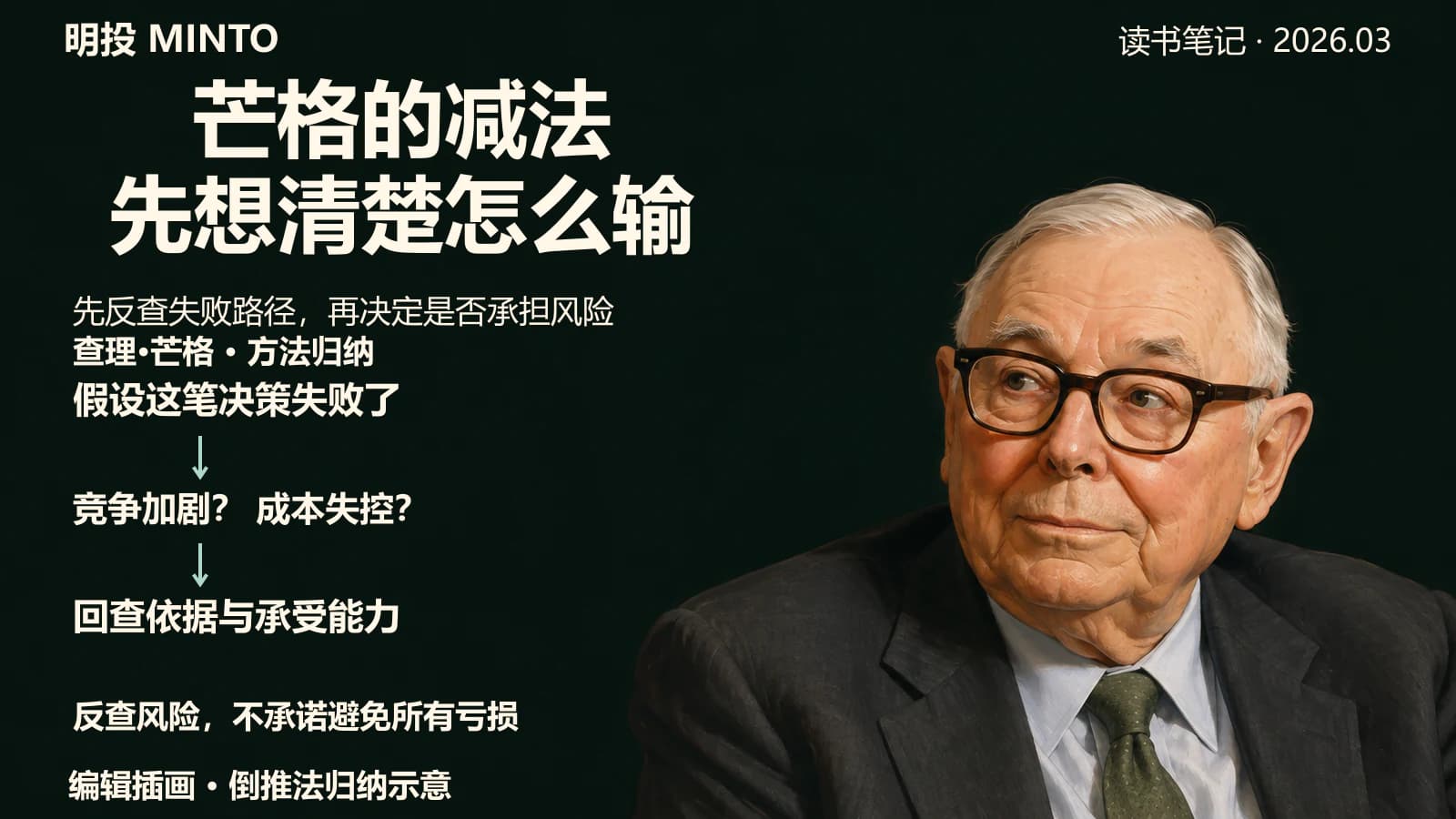
倒推要找到失败路径,也要检查恢复条件
研究一家公司的时候,先列出它可能失败的方式,往往比继续补充看好的理由更有用。需求下降、现金回收变慢、债务到期、融资稀释,都可以把一个看起来合理的长期故事变成眼前的生存问题。
《穷查理宝典》提供了一种检查判断的方法,不能代替公司的证据。编者是 Peter D. Kaufman,原书于2005年出版;本文核验的演讲文本来自 Stripe Press 的节选版,不能把这个版本等同于所有中文增订版本。
在该版第十一讲中,芒格谈到倒推,并将那句常见的“反过来想”归于数学家 Jacobi。他的用法是检查怎样形成坏判断,再设法避开。它并不是芒格原创的一句投资口令,也没有给出一套避免所有亏损的公式。
把这个方法用于公司研究,失败路径至少需要接上两个问题:什么证据表明风险正在发生,公司有没有资源和办法应对?例如,客户流失是一次性调整还是产品竞争力下降,现金减少来自暂时投入还是业务持续失血,同业降价是否会永久改变单位经济效益。
只写“可能被竞争对手打败”,还没有完成倒推。需要继续核对客户续约、毛利率、现金回收和债务期限,才能判断风险有多近。风险发生后,也不能直接断言公司没有恢复机会。芒格在第二讲讨论过 GEICO 的经营修复;这个案例支持继续检查可行的业务核心和修复措施,不能推出所有困境公司都能反转。
激励解释行为,证据检验结论
第十一讲把奖惩对行为的影响放在很重要的位置。芒格用 FedEx 的报酬安排和 Xerox 的销售佣金举例,说明规则可能改变行动方向。这些是作者在书中的说明性案例,不是对这些公司今天经营制度的调查。
在投资信息中,激励分析可以从持仓、报酬、商业合作和错误后果入手。一个推荐者可能受到利益影响,也可能提供了有效证据。发现利益关系,应当提高交叉核验的要求,不能直接把他的结论判成错误;没有明显利益关系,也不等于观点可靠。
同样,不能用一个激励变量解释所有公司决策。产品限制、组织能力、竞争、监管和融资条件,都可能使相同激励产生不同结果。芒格的第二讲强调跨学科判断,第十一讲也讨论多种倾向共同作用的复杂情形。把他的意思压缩成“激励解释一切”,会漏掉这些限制。
实际研究可以把两层问题分开:先问谁希望哪个结果发生,再问哪些独立材料支持这个结果。管理层说未来回报很高,要接着看投入、回款和兑现记录;别人指出公司有问题,也要核对问题的范围、严重程度和修复可能。
能力圈的边界要能被说明
“边界比大小更重要”的明确表述,可在巴菲特1996年致股东信中找到。不能把这段文字当作芒格的逐字引语。芒格在第二讲讨论了识别能力、在适合的领域获得优势,也谈到通过长期工作逐步积累能力。
能力圈不等于一串行业名称。熟悉产品不代表理解成本结构;知道竞争者的名字,也不代表能判断客户为什么留下。比较有用的边界是:哪些变量有记录可以验证,哪些依靠有限经验,哪些还无法判断。
学习可以扩展边界,但读完几篇材料并不会自动获得重仓的依据。进入陌生领域时,可以先整理关键问题、跟踪披露和修正解释,再判断是否具备承担风险的条件。这里没有适合所有人的固定学习比例或仓位上限。
对技术变化也应采用同样的方法。AI 可能改变业务流程,但“有新技术”与“原有竞争优势已经消失”之间仍然需要证据。客户是否迁移、价格是否变化、替代方案是否可靠、投入能否收回,都是需要逐项观察的变量。不能给所有行业设定同一个被颠覆时间表。
集中度先把分母写清楚
原稿用伯克希尔证明集中投资时,把股票组合与公司净资产混为一谈。这个错误会放大读者对风险暴露的理解。
伯克希尔2023年年报的权益证券附注显示,截至2023年12月31日,权益证券公允价值为3538.42亿美元,其中五家公司约占79%。苹果持仓公允价值为1743亿美元,占这组权益证券约49.3%,计算为1743除以3538.42。这两个比例的分母都是权益证券组合,不是伯克希尔整体净资产。
伯克希尔还拥有其他经营业务和资产。因此,不能把“苹果约占股票组合的一半”改写成“苹果占公司净资产的一半”,也不能据此推导普通个人账户应当复制同样的集中程度。这是2023年末的历史例子,不代表本文发表日或更正日的最新持仓。
个人组合中,直接持有的股票与基金底层持仓可能重叠。核对时应选择同一日期、同一资产价值口径,把相同公司的暴露合并,再看行业、客户和融资条件是否也有重叠。基金名称不同,未必能分散相同的经营风险。
集中、分散和尾部风险也不是一道二选一题。集中度回答损失可能落在哪些资产上,现金与融资约束回答能否承受损失;对公司有信心,并不能取消后一组问题。原稿把芒格与塔勒布各压缩成一套固定比例和互斥的世界观,缺乏充分依据,这里不再沿用。
把模型落到重新检查的条件
芒格关于跨学科思维的第二讲,演讲时间是1994年4月14日;相关内容后来刊载于1995年,不能混用演讲日期和发表日期。作者提到的模型数量属于学习建议,不是一张必须凑齐固定数量才能投资的清单。
模型的作用,是帮助发现遗漏的机制。一旦模型名称替代了证据,研究就会停在标签上。说一家公司有网络效应,需要说明用户增加怎样改善产品、改善幅度是否足以抵消成本;说激励有问题,需要解释报酬安排如何传导到可观察的行为。
下面是本文根据这些方法整理的复核问题,属于研究应用,不是原书的固定表格或芒格的统一投资规则。
| 环节 | 要核对什么 | 何时重看 |
|---|---|---|
| 倒推 | 需求、现金、债务 | 风险或修复变化 |
| 激励 | 报酬与独立证据 | 利益或兑现变化 |
| 边界 | 未知变量与依据 | 竞争或口径变化 |
| 估值 | 盈利与资金假设 | 假设或价格变化 |
利率可以影响折现率、融资成本和需求,但不能单独决定所有公司的持有或卖出时点。资本投入是否合理,也要看增量回报和资金承受能力,不能要求每家公司都追随 AI 投资节奏。
这本书能够帮助减少未经检查的判断,不能承诺长期收益。留在市场上是积累经验的条件,亏损资产、过高价格和持续费用也可能随时间扩大损失。更实际的用法是,在下一次财报或重大业务变化时,回到此前写下的失败路径,说明哪些已被证据排除,哪些正在接近,以及原有判断是否还成立。
资料来源
- Stripe Press:《Poor Charlie’s Almanack》版本与编者资料。原书2005年出版;该出版社提供节选版。
- Charlie Munger:第二讲,跨学科判断与公司研究。核验1994年演讲日期及本文涉及的能力圈、技术与经营修复段落。
- Charlie Munger:第十一讲,误判心理学。核验倒推归属、奖惩、多种倾向共同作用及学习相关段落;该文本包含作者2005年的修订。
- Berkshire Hathaway:1996年致股东信。核验巴菲特对能力圈边界的表述。
- Berkshire Hathaway:2023年年报。权益证券附注,第K-85页;金额及比例统一使用2023年12月31日口径。
更正说明(2026年10月3日)
保留2026年3月30日的原发表日期。此次纠正伯克希尔持仓比例的分母、倒推语句归属与演讲时间;撤回无法核实的个人投资和阅读经历、未具名股票案例、未经注明日期与口径的行情数字,以及把2026年上半年走势写成当时已发生事实的内容。收益承诺、固定仓位比例和行业颠覆时间不再作为作者结论或普遍规则。两张封面保留,均为读书主题的编辑插画,不是历史现场或本人投资经历的证据。

专注投资分析、市场洞察与资产配置。不追短期波动,只理解真正驱动长期回报的东西。