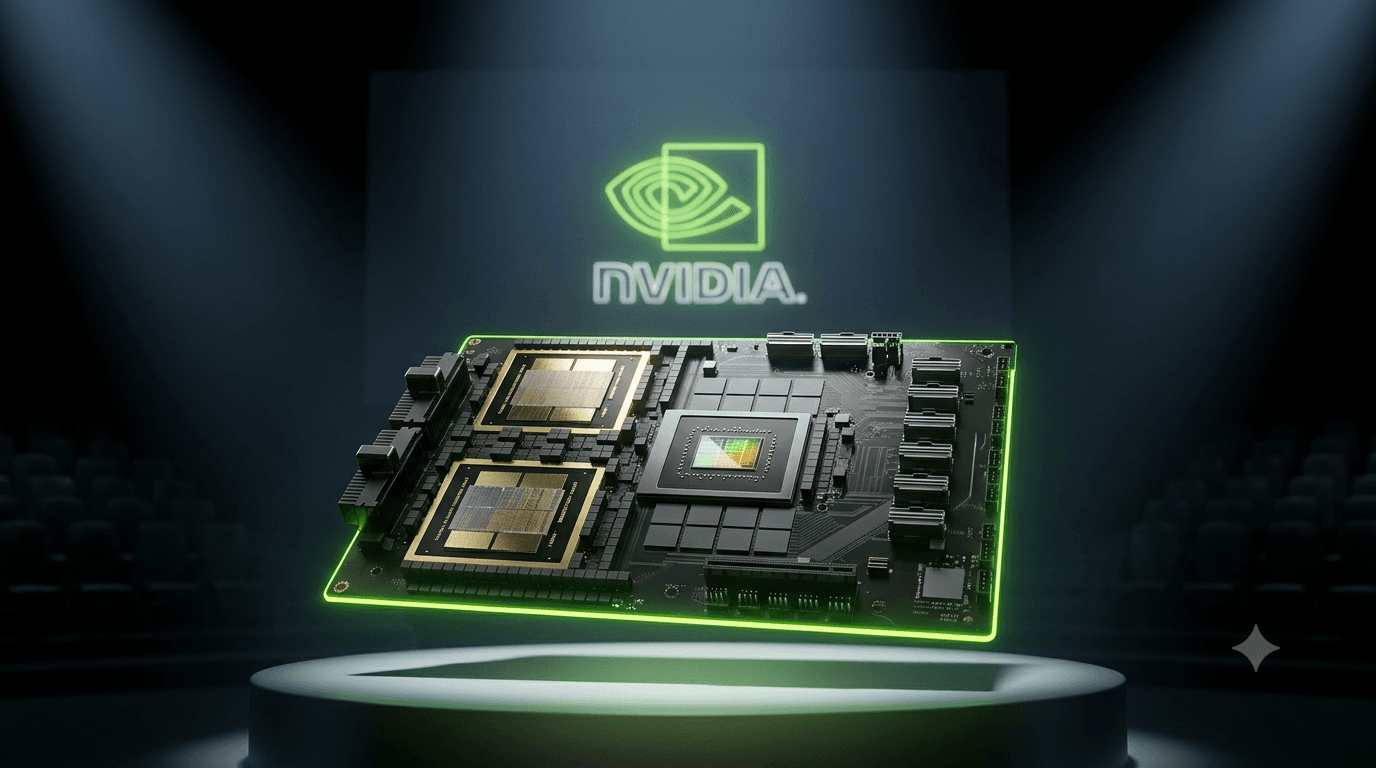
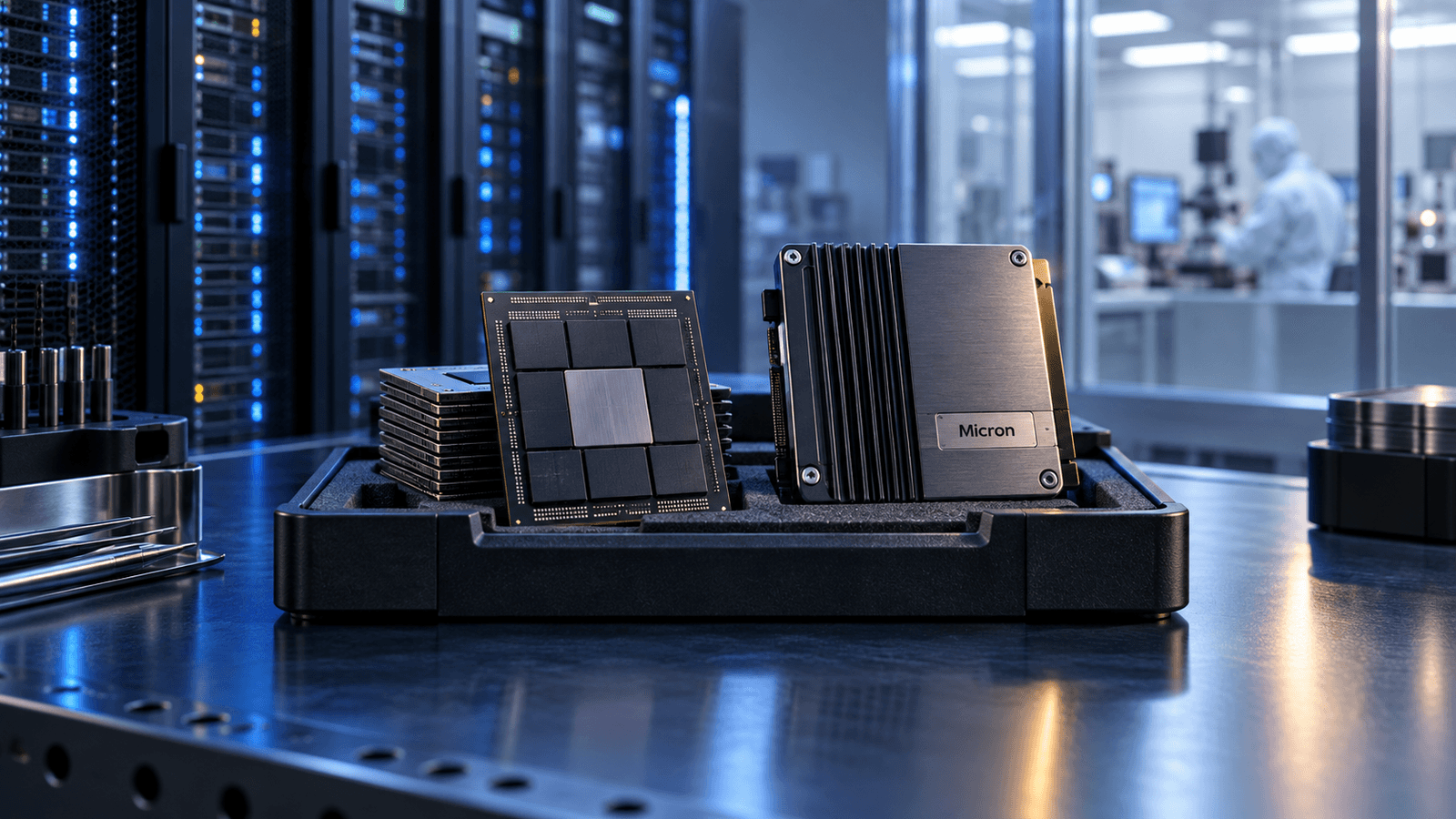
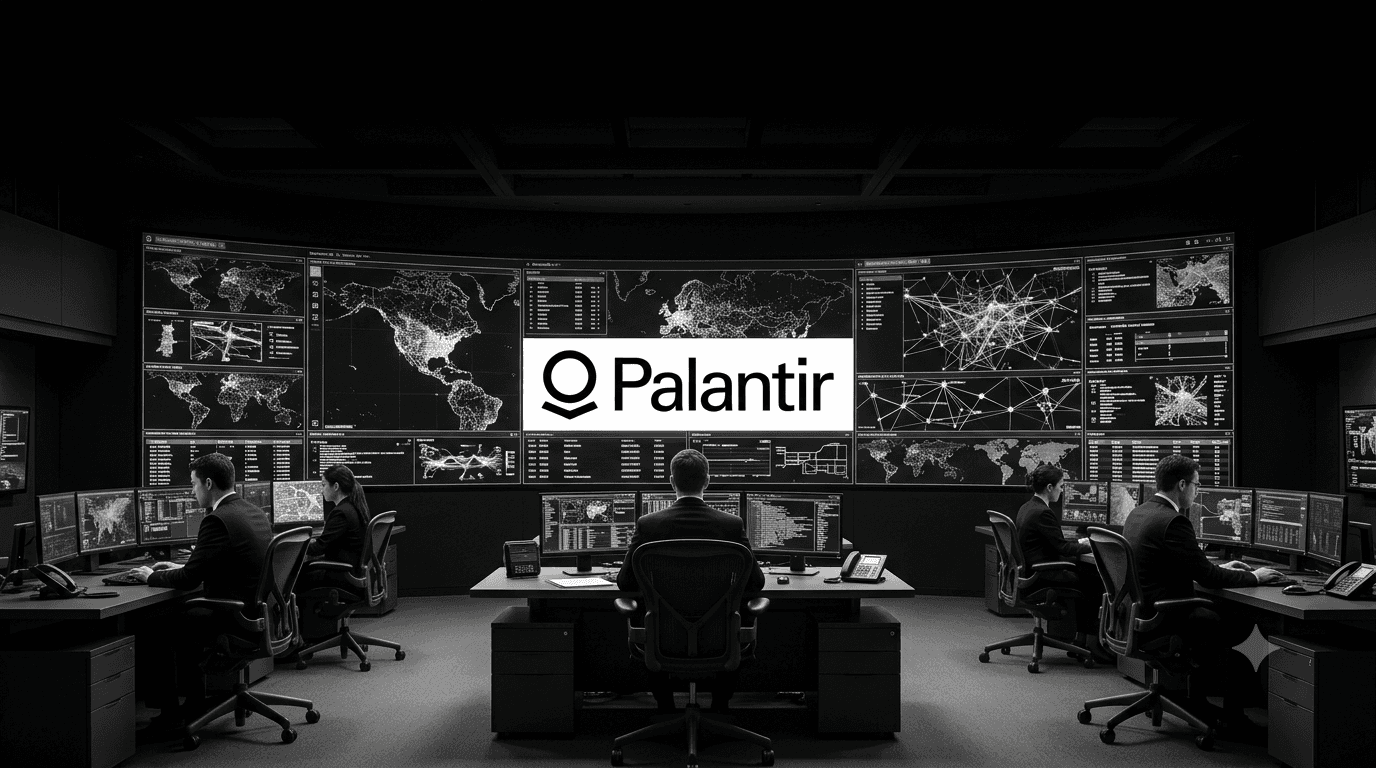
This GTC keynote is a must-watch. Jensen Huang's message: Nvidia has the ambition and capability to become the absolute center of future AI development. AI infrastructure is not a bubble because demand isn't—it's driven by real enterprise cost savings and profit improvements.
Here's the video:
https://www.youtube.com/watch?v=_waPvOwL9Z8&list=TLGGb4xEqt1pCykyMDAzMjAyNQ&t=1s
Jensen Huang's GTC keynote not only showcased the company's generational leap in chip technology but also outlined Nvidia's grand strategic blueprint—from accelerated computing to a full-stack AI infrastructure provider.
1. Core Compute Architecture & Iteration: Defining the Performance Limits of Future AI Factories
The core of this GTC was Nvidia's "one-year rhythm" for architectures, with a roadmap from Blackwell to Rubin pushing AI factory performance to the limit.
1.1 Blackwell Full Production & Inference Performance Leap
Nvidia announced that Blackwell GPU chips are now in full production in Arizona. This architecture focuses on optimizing inference performance and energy efficiency for large-scale AI factory operations.
· System Specs: The Blackwell system, particularly the GB200 AI supercomputer, integrates 2,592 Grace CPU cores and 72 Blackwell GPUs, totaling 130 trillion transistors and delivering 1.1 EF FP4 inference performance.
· Performance Optimization Software: To address the compute bottleneck of large-scale inference, Nvidia released NVIDIA Dynamo, a distributed inference serving library that handles heterogeneous GPU resource allocation and KV cache .
· Energy Efficiency Breakthrough: Through full-stack optimization—especially with Dynamo and TRT-—Nvidia achieved a massive boost in AI factory productivity. In a 32K ISL / 8K OSL scenario, Blackwell delivers 40x the performance of Hopper FP4. This efficiency means upgrading a 100 MW AI factory from H100 NVL8 to GB200 NVL72 can increase data center productivity ( revenue) by 40x.
1.2 Vera Rubin Architecture Preview & Specs
Jensen Huang showed the first physical sample of the next-gen Vera Rubin super GPU, expected to ship in volume as early as next year. This architecture aims for higher integration and performance.
· Vera Rubin NVL144 (H2 2026): Vera Rubin is a third-generation NVLink 72 rack-scale supercomputer with cable-less design. The Rubin NVL144 platform delivers 3.6 Exaflops FP4 inference and 1.2 Exaflops FP8 training—3.3x improvement over GB300 NVL72. It features 288GB HBM4 memory and a custom Arm-based Vera CPU (88 cores, 176 threads).
· Rubin Ultra NVL576 (H2 2027): The second-gen Rubin Ultra expands the NVL system from 144 to 576 GPUs. This platform delivers 15 Exaflops FP4 inference and 5 Exaflops FP8 training—14x improvement over GB300 NVL72. It packs 1TB HBM4e memory and 365TB of fast memory.
2. AI Factory Infrastructure & Interconnect Breakthroughs
To support future gigawatt-scale AI factories, Nvidia unveiled key infrastructure components and networking technologies to address data center communication and energy bottlenecks.
2.1 DPU Upgrade & Supercomputing Collaboration
· BlueField-4 DPU: Nvidia introduced the BlueField-4, a processor for the AI factory operating system. It supports 800Gb/s throughput, with 6x the compute power of BlueField-3, enabling 3x larger AI factories. Early versions will ship as part of the Vera Rubin platform in 2026.
· Supercomputing: Nvidia announced a collaboration with the US Department of Energy and Oracle to build Solstice, the DOE's largest AI supercomputer, featuring a record 100,000 Blackwell GPUs. In total, Nvidia will help build seven new supercomputers for the DOE, delivering 2,200 Exaflops of AI performance.
2.2 Photonic Switching System: Solving the Communication Bottleneck
To meet AI cloud and factory demands for higher bandwidth and lower power, Nvidia announced Photonics Switch Systems.
· Technology Innovation: Dubbed the world's most advanced co-packaged optics (CPO) switch. The technology involves innovations developed with ecosystem partners, including the first 1.6T silicon photonics CPO chip, novel micro-ring modulators (MRM), and the first 3D-stacked silicon photonics engine on TSMC process.
· Roadmap: Nvidia's photonics technology roadmap spans the Quantum-X and Spectrum-X families, designed to power the world's most advanced AI clouds and factories.
3. Vertical Industry Applications & Commercialization
Nvidia is deeply integrating AI compute into the most commercially valuable verticals through its GPU-optimized software stack (NIM microservices, DRIVE AV, etc.), marking a "full-stack" strategy from chips to applications.
3.1 Autonomous Driving & Robotaxi
· Platform: Nvidia launched the next-gen autonomous driving development platform, DRIVE AGX Hyperion 10, a universal reference production platform for L4 autonomy.
· Partnerships: Nvidia announced collaborations with ride-hailing giant Uber and Stellantis (Chrysler's parent). Uber plans to scale its global autonomous fleet to 100,000 vehicles starting in 2027, all based on Nvidia technology. Stellantis will be among the first to produce such vehicles, with production slated for 2028.
3.2 Enterprise Operations Intelligence & Cybersecurity
· Enterprise AI Transformation: Nvidia deepened its partnership with AI star Palantir, integrating Nvidia's GPU compute, CUDA-X data science libraries, and open-source models (e.g., Nemotron reasoning models) into Palantir's AIP Ontology system. Retailer Lowe's is the first adopter, using the integrated stack to optimize its global supply chain.
· Cybersecurity: A strategic partnership with CrowdStrike combines Falcon XDR platform data with Nvidia accelerated computing and software (including new NIM microservices) to help customers build custom generative AI security models to counter faster, more sophisticated modern attacks.
3.3 AI Factory for Drug Discovery
Nvidia partnered with pharma giant Eli Lilly to build a supercomputer (AI factory) powered by over 1,000 Blackwell Ultra GPUs, aiming to embed AI into drug discovery science and vastly expand the scope and complexity of drug discovery. The AI factory is expected to be completed in December and go live in January.
4. Frontier Technology Bets: 6G, Quantum Computing & Physical AI
Nvidia's bets extend to next-generation infrastructure and computing models, laying the groundwork for the tech ecosystem a decade out.
4.1 6G Networks & AI-RAN Convergence
· Strategic Investment: Nvidia announced a strategic partnership with Nokia and a $1 billion equity investment in Nokia.
· Technology Goal: The two will jointly launch the Aerial RAN Computer (ARC) for 6G networks, advancing an AI-native 6G network platform. This aims to capture the AI-RAN market, expected to cumulatively exceed $200 billion by 2030.
· Application: T-Mobile US will collaborate to test and develop AI-RAN technology, supporting AI-native devices like autonomous vehicles, drones, and AI glasses.
4.2 Quantum Computing & Classical Computing Synergy
Nvidia introduced NVQLink, an open-source system architecture built on its CUDA-Q quantum development platform.
· Technology Purpose: NVQLink is a new high-speed interconnect technology designed to link quantum processors with GPU supercomputers, helping achieve error correction and accelerate quantum computing.
· Scale: Jensen Huang said NVQLink will help scale quantum computers from hundreds of qubits today to tens of thousands.
· Ecosystem Support: The technology has gained support from 17 quantum computing companies and 5 controller manufacturers.
4.3 Physical AI & Humanoid Robots
Jensen Huang predicted humanoid robots will become the largest electronics market.
· Foundation Model & Platform: Nvidia introduced the NVIDIA Isaac GR00T N1 Humanoid Foundation Model and continues to focus on using Omniverse digital twin technology (Cosmos) to build modern factories and train robots.
· Hardware: Robot startup Figure announced a collaboration with Nvidia to accelerate next-gen humanoid robot development. Nvidia also launched the next-gen industrial edge AI platform IGX Thor, delivering 8x AI compute.
This is Nvidia's future product roadmap, clearly showing the path from Blackwell to Rubin to Feynman. That's the gist of this GTC.
If you want the full PPT and keynotes, reply with "AI" in the background to get the materials.
Risk Disclaimer: This content is for informational purposes only and does not constitute investment advice. Market risks exist; invest with caution.

On investment analysis, market insight, and asset allocation — not chasing short-term noise, but understanding what truly drives long-term returns.