Rocket Lab USA, Inc. (NASDAQ: RKLB) is a key player in global commercial space, covering small rocket launch services to complete spacecraft design and in-orbit operations. For the public and potential investors, understanding RKLB's strategic layout, technological innovation, and financial performance is crucial to assessing its investment value. Let's start with the company's founder.
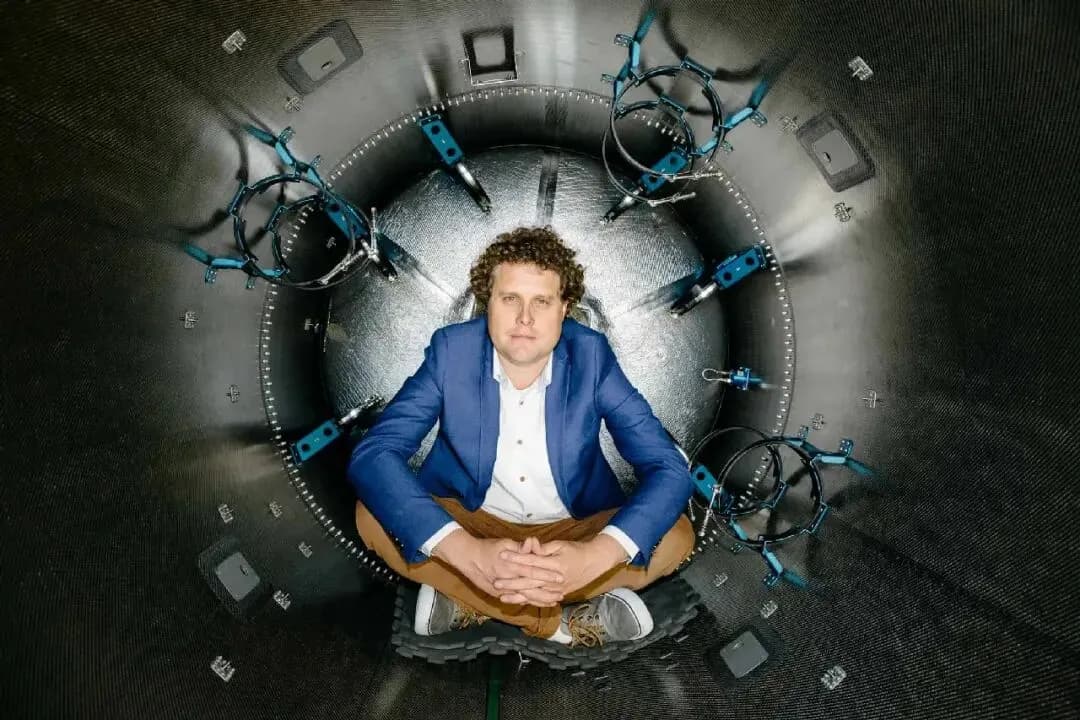
Peter Beck: The Practitioner Transforming Space
Rocket Lab's founder, CEO, and chief engineer, Sir Peter Beck, has profoundly shaped the company's innovation culture and strategic direction. His early career reflects strong engineering practice and innovative spirit.
He started as an apprentice at Fisher & Paykel, a precision agricultural machinery manufacturer in New Zealand. He then joined the Industrial Research Limited (IRL), a center focused on scientific research and engineering, where he worked on carbon fiber materials and quickly adapted to the team's research. Peter's vision for commercial space stemmed from his dissatisfaction with the inefficiency of traditional space agencies. He visited NASA's Jet Propulsion Laboratory (JPL) but witnessed bureaucracy and outdated organizational structures, which triggered a crisis of confidence in the entire space industry for the then-aspiring innovator. Driven by this experience, Peter resolved to create a revolutionary space access solution. He set RKLB's mission as democratizing low-cost space access through efficient technology. This contrasts sharply with some peers' grand narratives of crewed Mars missions; Peter focuses on efficiency and cost-effectiveness.
Rocket Lab was founded in 2006, initially in New Zealand. Despite lacking industry connections and facing funding difficulties in New Zealand, Peter's persistence led to a Series A investment from Khosla Ventures in 2013. The company then moved its headquarters to California, but some engineering and manufacturing teams remain in New Zealand. Peter's vision, innovation, and decision-making are the company's lifeline; RKLB's success is highly dependent on him.
Also worth noting, Peter Beck is called "Sir Peter Beck" because he was appointed a Knight Companion of the New Zealand Order of Merit in the 2024 King's Birthday Honours, one of New Zealand's highest honors, conferred by King Charles III. This honor recognizes his outstanding contributions to the aerospace industry, business, and education. As the founder and CEO of Rocket Lab, he has driven space innovation and development in New Zealand and globally, including small rocket launch services and satellite manufacturing. Peter expressed humility and gratitude for the honor, having started as a self-taught rocket scientist and now becoming an iconic figure in New Zealand's space sector.
Business Model & Core Technology: End-to-End Space Services
Rocket Lab's strategic core is to build an end-to-end space service industry chain highly similar to SpaceX, covering launch vehicles, spacecraft component manufacturing, and in-orbit management. The company currently operates two segments: Launch Services and Space Systems.
1. Launch Services & the Electron Rocket
RKLB primarily provides customized orbital deployment missions via the Electron light launch vehicle.
Electron is one of the smallest liquid launch vehicles with a high launch rate business model that has been successfully launched. Its success is built on several key technological innovations: First, Electron's airframe, including the tanks, uses all-carbon-fiber composites, which greatly reduces weight and increases production speed. Second, its Rutherford engine is the first to use a battery-powered electric turbo-pump design and is extensively manufactured using 3D printing, simplifying production and reducing costs.
The following image shows the full process of Electron from liftoff to recovery.
The original plan was to catch the descending rocket with a helicopter (demo available on the website), but the technical difficulty was high. The current approach is to recover the rocket from the ocean using a boat.
Rocket Lab operates three main launch sites globally: LC-1 on the Mahia Peninsula in New Zealand, a private orbital launch site; LC-2 on Wallops Island in Virginia; and LC-3 being prepared for the Neutron rocket. LC-1 can theoretically support up to 12 missions per year, and LC-2 up to 12 missions per year. As of now, Electron has completed 72 orbital missions, deploying 238 spacecraft.
2. Space Systems
Extending the value chain, the Space Systems segment has become a key revenue driver for Rocket Lab in recent years. This segment designs, manufactures spacecraft components, satellites, and in-orbit management solutions. Products include high-performance spacecraft components (reaction wheels, star trackers, propulsion systems, power solutions) and satellite platforms like Photon. Through acquisitions (including Planetary Systems, SolAero Holdings, Advanced Solutions, etc.), RKLB has enhanced its vertical integration manufacturing capabilities and control over the satellite component supply chain. Strategic acquisitions (e.g., Geost) have given it the ability to develop and manufacture advanced optical and infrared payload sensors. Payloads are the core equipment for satellite missions; this integration fills a key missing link in RKLB's end-to-end business, enabling it to provide complete solutions from launch and satellite platforms to core sensors for high-value missions like Earth observation and space situational awareness. The growth of the Space Systems business makes its business model more robust and extends into higher-margin in-orbit applications and services.
This strategic goal is to achieve end-to-end solution delivery, where customers can entrust their payloads to RKLB, which handles everything from launch to in-orbit operations. The growth of Space Systems makes the business model more robust and extends from pure launch services into higher-margin in-orbit applications and data services. Additionally, the recent acquisition of Mynaric helps Rocket Lab enter the laser communications field, gain a European production base, and enhance capabilities in satellite components and subsystems to better address large satellite constellation demands. Rocket Lab can also use this German company to open up the European market.
Mynaric's products are mainly optical communication terminals (e.g., CONDOR Mk3), which use laser beams for high-bandwidth data transmission between satellites. Benefits for Rocket Lab include: resolving supply chain bottlenecks for laser communication systems, improving terminal availability and reducing costs; acquiring intellectual property, production assets, and existing orders (e.g., a USD 515 million contract for the U.S. Space Development Agency); supporting its satellite manufacturing business; and providing customers with more complete communication solutions.
The total cost of this acquisition is USD 150 million, with an initial payment of USD 75 million (in cash or Rocket Lab shares) and a potential additional USD 75 million in performance-based payments depending on Mynaric's revenue targets for 2025-2027.
This acquisition provides technical support for Rocket Lab to eventually own its own satellite constellation. Once Rocket Lab has a low-Earth orbit satellite internet system like SpaceX's , this business could generate stable cash flow. Jeff Bezos's Blue Origin is also working on its low-Earth orbit satellite internet project, Project Kuiper, and has secured its first commercial partner, JetBlue, for in-flight Fly-Fi services. Having stable cash flow is crucial for a publicly traded company like Rocket Lab. Unlike Elon Musk or Jeff Bezos, who have billions to burn, Rocket Lab's path is steady progress, seeking sustainable profitable businesses.
3. Neutron Rocket: Moving into the Medium-Lift Market
To meet the launch capacity requirements for large satellite constellation deployments, RKLB is developing the Neutron medium-lift rocket. Neutron's target LEO payload capacity is approximately 13,000 kg, with a key feature being the reusability of both the first stage and the fairing. It uses a unique "Hungry Hippo" fairing design that can close and return with the first stage after releasing the second stage. To enable the fairing to return safely with the first stage, RKLB leverages its strong vertical integration in carbon fiber manufacturing to design a historically large 7-meter diameter, "short and stout" airframe configuration for enhanced structural stability.
Neutron's success will allow RKLB to directly serve customers with higher launch capacity requirements, such as large commercial and government satellite constellations, and enable deep space and future crewed missions.
The Neutron project is currently in the prototype phase (conducting key large-scale ground tests). Following normal rocket development rules, Neutron's successful first flight will require rigorous engineering verification and testing. Industry insiders generally believe that given the difficulty of developing the engine, launch pad, and production facilities, the project may be delayed to early 2026. But from an engineering perspective, "delayed success is better than on-time failure" is an important principle in complex system development. Neutron's success will be key for RKLB to achieve scale competition and expand into deep space missions.
Financial Performance: Revenue Structure Changes & Continuous Investment
As a high-growth tech company, Rocket Lab's financial reports show rapid revenue growth and persistent net losses, consistent with the large upfront capital expenditures and R&D investments in commercial space. The company has secured a total of USD 777 million in funding from business combination and PIPE financing, which it expects to meet its working capital and capital expenditure needs for at least the next twelve months. Revenue and losses (in USD billions): Based on consolidated financial statements for the years ended December 31, 2024, 2023, and 2022, key financial data for RKLB is as follows (in USD billions):
| Financial Metric (USD billions) | 2024 | 2023 | 2022 |
| Total Revenue | 4.3 | 2.4 | 2.1 |
| Launch Services Revenue | 1.19 | 0.72 | 0.61 |
| Space Systems Revenue | 3.15 | 1.73 | 1.50 |
| Gross Profit/(Loss) | 1.16 | 0.51 | 0.02 |
| Net Loss | (1.90) | (1.83) | (1.36) |
| Net Loss Per Share (Diluted) | (0.38) | (0.38) | (0.29) |
Revenue Structure & Trends: RKLB's total revenue grew from approximately USD 210 million in 2022 to approximately USD 430 million in 2024. Notably, Space Systems revenue (USD 315 million in 2024) has significantly exceeded Launch Services revenue (USD 119 million). This indicates substantial progress in the strategic shift toward higher-value spacecraft components and in-orbit solutions upstream in the value chain. Profitability: Although gross profit turned positive in 2024 at USD 116 million, the company still recorded a net loss of USD 190 million, reflecting significant R&D spending on the next-generation rocket (Neutron) and space systems infrastructure. The company expects losses to continue until sustainable revenue growth and economies of scale are achieved.
RKLB's Direction & Core Risks
RKLB's future value will depend on the deepening of its end-to-end strategy and the progress of the Neutron project.
1. Long-Term Value Proposition of the Business Model
RKLB is transforming from a pure launch service provider into an integrator offering a complete space industry chain solution. The company has strong vertical integration capabilities in carbon fiber composite manufacturing, which not only supports the lightweight and rapid production of the Electron rocket but also provides the foundation for Neutron's unique structural design. This vertical integration and automated production system are key differentiators for RKLB. By acquiring satellite component and payload manufacturing capabilities, RKLB can better control the supply chain, improve efficiency, and extend into higher-margin in-orbit service segments. In the commercial space industry chain, while rocket launches are the foundation of all space activities, they account for a relatively small share of total global space industry revenue. In contrast, satellite services and in-orbit applications generate enormous commercial value. RKLB's shift in focus to Space Systems, with that segment now dominating revenue, is a key path to pursuing long-term high-value growth.
2. Neutron's Engineering Challenges & Market Opportunities
The Neutron rocket is critical for RKLB to compete with giants like SpaceX in the medium-lift market. The rocket is currently in the prototype phase (conducting key large-scale ground tests). From an engineering perspective, rocket development is a complex and time-consuming process involving multiple stages: concept demonstration, preliminary design, prototype, and qualification. Although RKLB targets a first flight by the end of 2025, industry professionals believe that given the difficulty of developing the engine, launch pad, and production facilities, a delay to early 2026 is likely. In complex system development, schedule delays are common, and "delayed success" is usually better than "on-time failure." If Neutron successfully reaches orbit and achieves reusability as planned, it would significantly boost RKLB's market valuation and allow it to capture a share of the rapidly growing large satellite constellation deployment market.
Investment Risk Disclosure
Investors should fully recognize the inherent risks facing RKLB:
- Operational Risk: Rocket launches are inherently risky. Any launch failure, delay, or technical malfunction could materially adversely affect the company's operations and financial condition.
- Market Competition: RKLB faces intense competition from established giants like SpaceX and numerous emerging startups. Rapid technological development requires RKLB to continuously innovate.
- Government Dependence: A portion of the company's revenue comes from contracts with the U.S. government and its agencies, making it susceptible to changes in government policy, budget, or regulatory restrictions (e.g., export controls).
- Key Person Risk: The company's success is highly dependent on the continued service of Peter Beck, much like Berkshire Hathaway's Warren Buffett, Nvidia's Jensen Huang, or Tesla's Elon Musk. Any inability of this key figure to continue in his role could materially adversely affect the company.
- Valuation Risk: There is no publicly traded company directly comparable to Rocket Lab, so its valuation must be compared to unlisted SpaceX. After the next quarterly report, I will combine the latest financials to compare Rocket Lab's valuation with SpaceX's to assess whether the stock is expensive. Since I needed to research extensively and this is my first time studying a space sector company, the writing cycle was long. When I started, RKLB's stock price was around USD 30-40; now it's at USD 67 (as of the latest). This is near an all-time high, which I did not anticipate. Publishing this article at the peak is not what I wanted. Given my medium- to long-term bullish view on Rocket Lab, although now is not the best time to overweight RKLB, I hope investors reading this article will pay attention to this company. It's also a great company for rocket science or aerospace enthusiasts to learn about, introducing this private space tech company across the ocean. Rocket Lab could become a key player in future space competition.
Risk Warning: The views in this article are for reference only and do not represent any investment advice. Market risk exists; invest with caution.


On investment analysis, market insight, and asset allocation — not chasing short-term noise, but understanding what truly drives long-term returns.