After a 25%+ rally last year, the Nikkei 225 is again one of the best-performing indices in 2024. In China's ETF market, premiums have surged above 20% as investors scramble for Nikkei-linked products. What's driving the frenzy, and what sustains the rally?
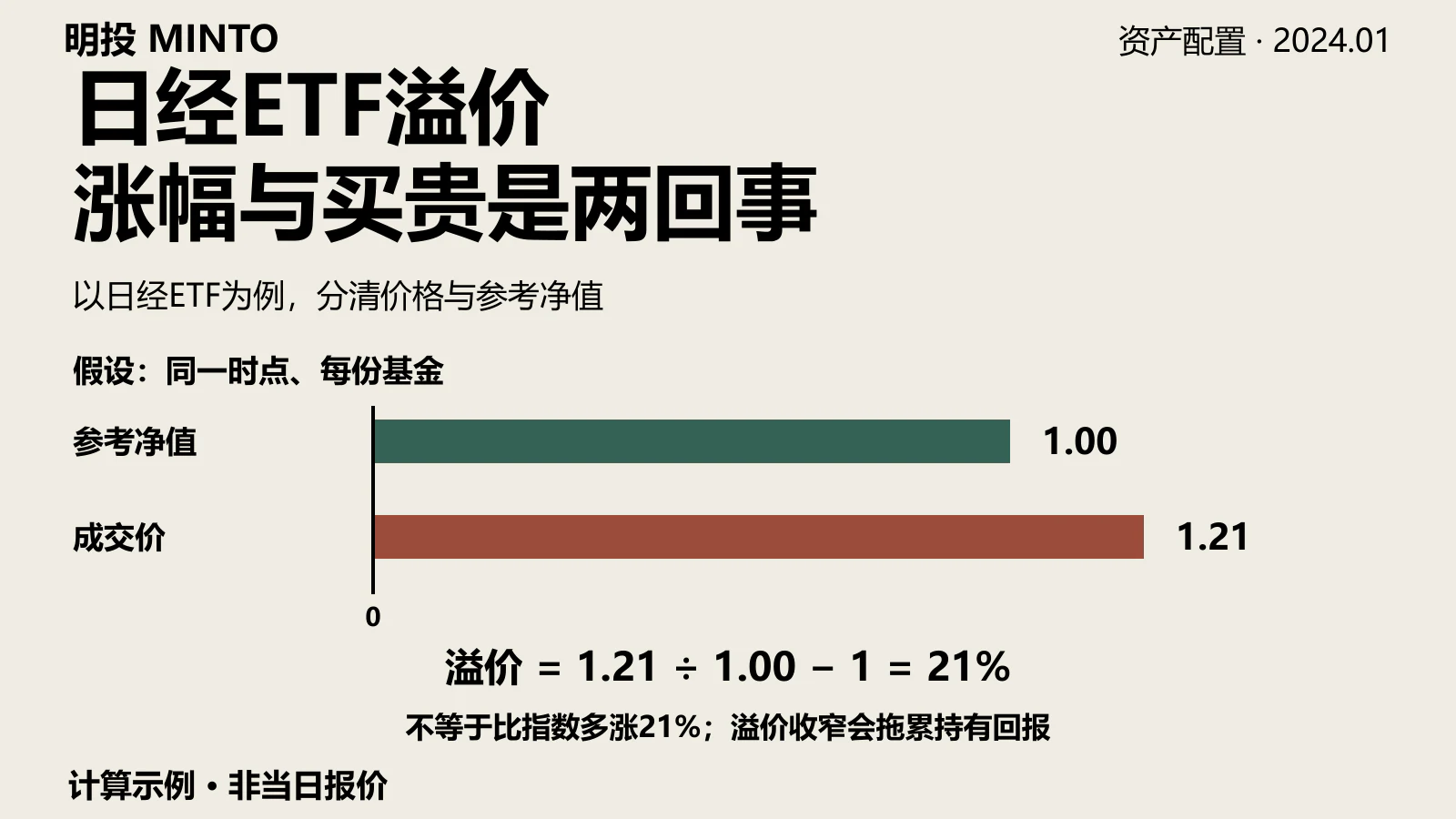
The chart below shows the daily trend of a Nikkei ETF (513520), with a premium of 21% — meaning the ETF has risen 21% more than the underlying index. Investors are effectively paying 1.21 for something worth 1.00, a clear sign of exuberance.
The Nikkei 225 itself has gained about 35% recently.
So what factors are driving sustained inflows into the Nikkei?
1. Encouraging Dividends and High Dividend Yields
On March 31, 2023, the Tokyo Stock Exchange issued a directive on achieving cost-of-capital and stock-price-conscious management, further pushing for valuation improvement. It specifically requires companies with a P/B ratio below 1x to explain and improve. Measures include: (a) share buybacks to improve P/B and ROE; (b) timely strategic adjustments; (c) focusing on capital returns; and (d) establishing transparent information channels.
2. Loose Monetary Policy Makes Nikkei a Top Asset
Part of the rally is fueled by Japan's loose monetary policy, which depresses bond yields and corporate borrowing rates. The implied earnings yield on the Nikkei (5.3%) exceeds the corporate borrowing rate (1.4%), making it attractive for companies to issue debt for buybacks (Q1 2023 saw JPY 9 trillion, or ~USD 67.6 billion, in buybacks — a 16-year high) and for foreign investors to borrow and buy. Given mild inflation, the BOJ may slightly tighten (likely ending YCC but unlikely to raise short-term rates). Even if YCC ends, the earnings yield may still exceed borrowing costs, sustaining the buyback/borrow-to-buy cycle. Moreover, ending YCC could attract foreign capital back to Japan, boosting yen assets. Japan holds nearly USD 4 trillion in overseas assets.
3. Government Buying: BOJ, Pension Funds, and Public Funds
- 2010: BOJ starts buying ETFs
- 2012: Purchase quota raised from JPY 1.4 trillion to 1.6 trillion
- 2015: Annual purchases of JPY 3 trillion
- 2017: Raised to JPY 6 trillion
- 2020: Increased to JPY 12 trillion
As of March 2023, the BOJ held JPY 48 trillion in ETFs, making it the largest market participant. Goldman Sachs analyst Kazunori Tatebe, in a June 21 report, forecast the TOPIX could reach 2,500 in 12 months (9% upside from the June 22 close), up from a prior target of 2,200.
4. Foreign Bulls: Buffett, Goldman Sachs
Buffett began buying five Japanese trading houses (Itochu, Mitsubishi, Mitsui, Sumitomo, Marubeni) in 2020. After visiting Japan, he openly expressed optimism about Japanese equities.
(Source: Bloomberg)
Goldman Sachs' Kazunori Tatebe reiterated his bullish TOPIX target of 2,500. In summary, the extreme premium reflects frothy demand for Nikkei ETFs. Investors should be cautious and avoid chasing. The best strategy is to pick up roses from the ground, not chase rainbows in the sky.
Risk disclaimer: This content is for reference only and does not constitute investment advice. Past performance is not indicative of future results. Market risk exists; invest with caution.

On investment analysis, market insight, and asset allocation — not chasing short-term noise, but understanding what truly drives long-term returns.