跳到正文 · Skip to content
内容
关于与合作
订阅与会员
★ 查看会员权益
设置
主题色
版本 · 深色 / 减动搜索⌘K
草稿预览·这篇还没发布,不会出现在列表和 RSS 里。review 完后把 frontmatter 的 draft: true 改为 false 即可。

What Makes a Great Company? Nvidia's 100x Decade and the AI Revolution

2023.08.289 min原创

AI is a product of social development and technological innovation, a key driver of the new tech revolution and industrial transformation, profoundly impacting the global economy, society, and daily life. This year, both US and A-shares have seen a wave of AI investment, pushing the Nasdaq 100 up over 40% at its peak. A-shares also had a rally (the funds I bought, based on last year's annual report, were still talking about the bright future of new energy, but this year they immediately embraced AI as the new darling, dumping all new energy positions in Q1 and Q2 to chase semiconductors and AI-related sectors—pretty frustrating...). Now, both institutions and retail investors feel compelled to buy AI stocks due to FOMO (Fear Of Missing Out). Everyone knows AI is overheated, yet they keep buying, watching the Nasdaq's gains vanish when tech is excluded, and seeing most non-AI sectors in A-shares drift lower. Investors are forced to keep investing in AI. Amid this, we must be selective: which companies will deliver earnings to justify their stock prices in the AI wave, and which are just jumping on the bandwagon? In this mixed market, we need to identify which stocks are worth buying and holding long-term. Let's keep our eyes open and explore AI's investment value.

This article starts with capital market performance to reflect the different AI investment logics across markets, then examines the leader of this AI wave—Nvidia's earnings and guidance—and finally reveals AI's investment logic from a Goldman Sachs report, addressing whether AI is currently overvalued.

What Makes a Great Company?

iFLYTEK's Share Reduction

"Liu Qingfeng sold some of his shares via block trades on the day. According to iFLYTEK's announcement, Liu sold 39.96 million shares worth RMB 2.35 billion, reducing his stake from 7.27% to 5.54%. iFLYTEK stated that the sale was due to the maturity of a RMB 2.35 billion debt from a 2021 share purchase financing."

Kunlun Tech Founder Zhou Yahui's Ex-Wife

"As of July 19, 2023, within this reduction plan period, Ms. Li Qiong cumulatively reduced her holdings by 35,868,507 shares, including 11,956,107 shares via centralized竞价 (at an average price of RMB 38.92, cashing out RMB 465.5 million) and 23,912,400 shares via block trades (at an average price of RMB 35.08, cashing out RMB 839 million). This means Ms. Li Qiong cashed out a total of RMB 1.3 billion from Kunlun Tech."

Even more frustrating, Li Qiong then lent the proceeds back to the company at an annual interest rate of 2.5%, earning RMB 16.25 million a year in interest without lifting a finger.

360's "Divorce" Share Reduction

Currently, 360's shares are fully tradable, meaning Zhou Hongyi's holdings are unlocked. His divorce and share split announcement quickly sparked market debate, with some questioning whether it was a fake divorce to facilitate share reduction.

The company's announcement stated that 360's actual controller remains Zhou Hongyi, with voting rights of 52.45%. Zhou and his concert parties have no reduction plans for the next 12 months, and Ms. Hu Huan will not increase or reduce her holdings for the next 6 months. Any future plans will comply with regulations. Since Ms. Hu Huan holds no position at 360, the change has no material impact on operations.

Hua Hong Semiconductor Raises RMB 21 Billion from A-Share IPO to Buy Wealth Management Products

Notably, statistics show that A-share dividends this year total about RMB 1.79 trillion, but actual buybacks are only RMB 20 billion. Over the past decade, share reductions have been frequent: RMB 476.7 billion in H1 2023, with a full-year estimate exceeding RMB 900 billion. Total A-share buybacks in H1 were RMB 33.6 billion. As of end-July 2023, A-share fundraising exceeded RMB 764 billion, with annual "bleeding" of RMB 800-1500 billion, indicating negative overall investment returns. In contrast, US stocks in 2022 raised RMB 150 billion, paid RMB 5.7 trillion in dividends, and bought back over RMB 9 trillion. (Who's really winning this game?)

Contrast with US Stocks:

Apple: $27 Billion in Dividends, $90 Billion in Buybacks This Year

Apple CFO Luca Maestri said: "Given our confidence in Apple's future and the value we see in our stock, our board has authorized an additional $90 billion for share repurchases." He added that operating cash flow was $28.6 billion, and over $23 billion was returned to shareholders. Apple declared a cash dividend of $0.24 per share, a 4% increase.

Google: $70 Billion Buyback

Alphabet's board approved a $70 billion share repurchase plan, up from $50 billion in 2021 and $25 billion in 2019. This marks a significant acceleration in returning capital to shareholders. Alphabet said it will consider stock price and market conditions when deciding timing. In 2021, Alphabet ranked second in buybacks after Apple, with Meta third.

Meta (Facebook): $40 Billion Buyback

Meta reported Q4 2022 revenue of $32.165 billion, down 4% YoY, and net income of $4.652 billion, down 55% YoY. Revenue beat expectations, and Meta announced an additional $40 billion in share repurchases.

Nvidia: $25 Billion Buyback

After generating $7.78 billion in adjusted operating income, Nvidia announced a massive $25 billion share repurchase plan. In Q2, it spent $3.28 billion on buybacks, with $4 billion remaining authorized.

A company that has risen 100x in 10 years and 1000x since its IPO, yet still buys back its own stock—that's a truly confident, technologically leading company.

Nvidia

Nvidia Earnings

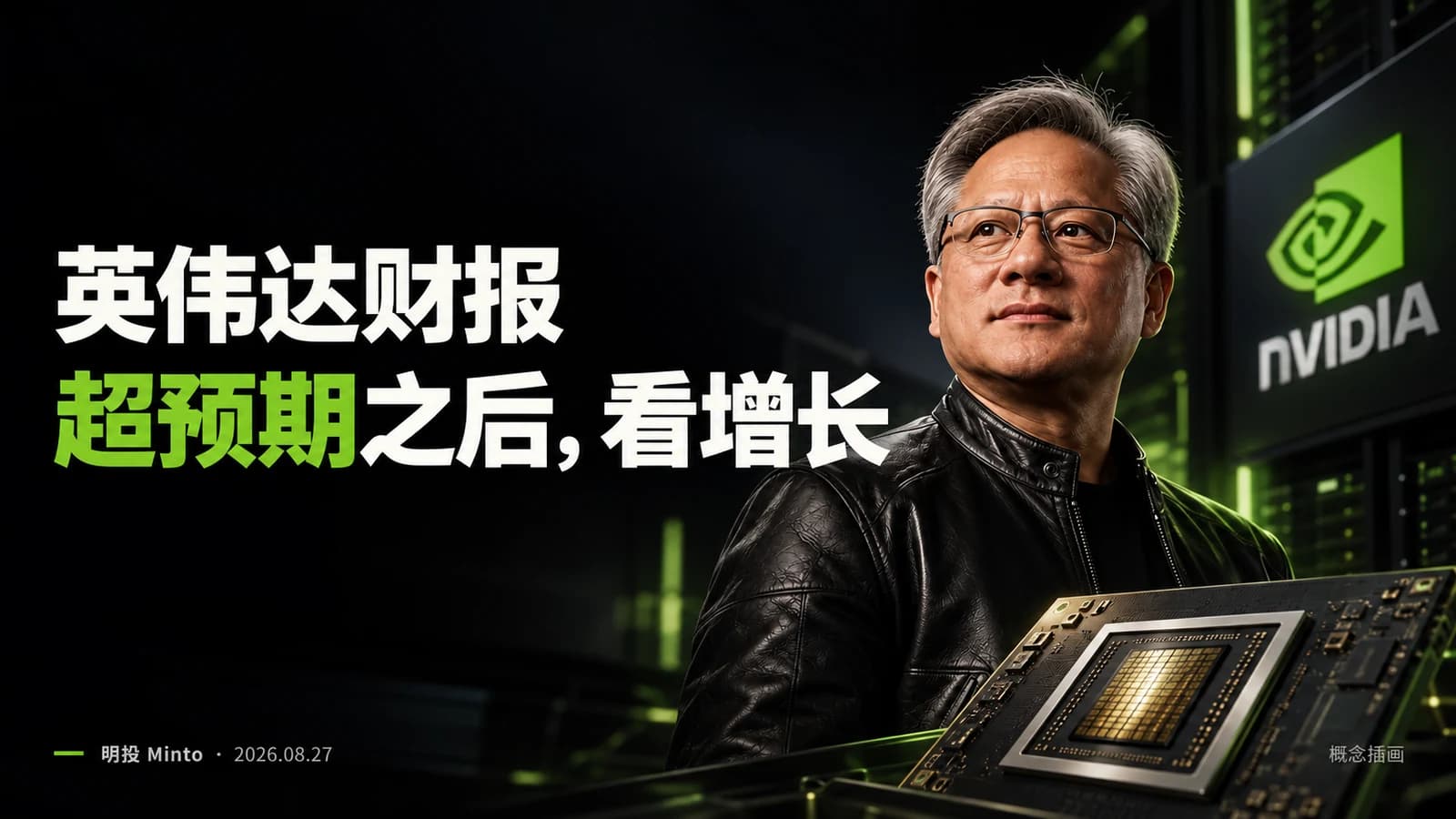
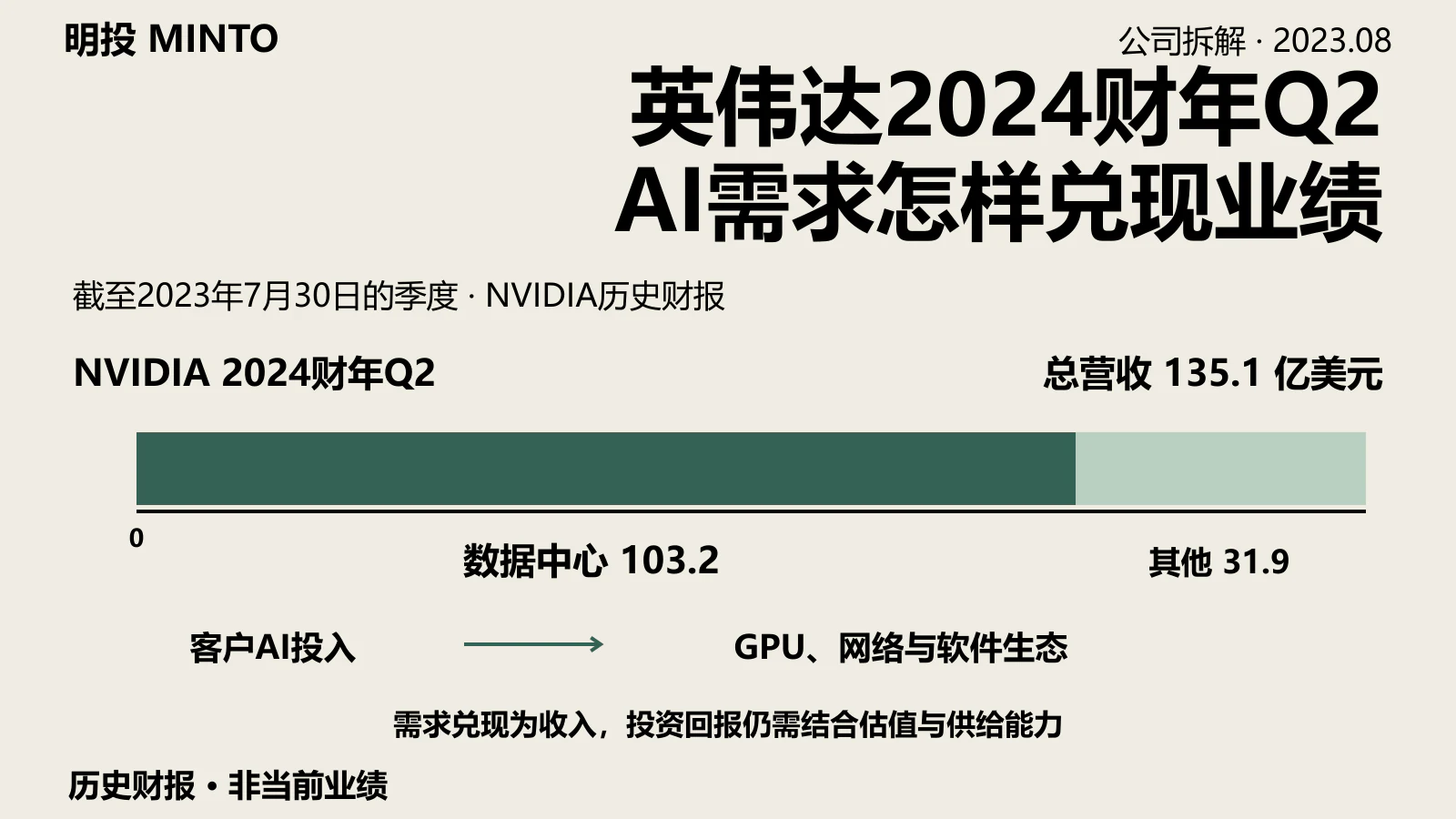
Nvidia (NASDAQ:NVDA) shares rose Thursday after the company reported stronger-than-expected Q2 results and provided guidance that easily beat analyst estimates. The company had previously surprised with revenue expectations, and despite high expectations, Nvidia's dominant position in the AI transition made it easy to meet and exceed them. Overall, Nvidia's EPS was $2.70, beating estimates. Adjusted gross margin was 71.2% vs. 70.1% expected. Gaming revenue was $2.49 billion, up 22% YoY and above the $2.38 billion consensus. Professional visualization and automotive segments contributed $379 million and $253 million, respectively.

Nvidia said Q2 revenue surged to $13.51 billion, up 88% QoQ and 101% YoY, driven by a surge in data center revenue, which rose 141% YoY and 171% QoQ.

Founder Jensen Huang said, "A new computing era has begun. Companies worldwide are transitioning to accelerated computing and generative AI. Our Mellanox networking and CUDA AI software stack form the computing infrastructure for generative AI."

Analysts expected total revenue of $11.04 billion and data center sales of $7.98 billion. Most upside came from the US, where customers invested in AI and accelerated computing. The division, which produces high-end AI chips, had reportedly secured billions in orders.

CFO Colette Kress said on the earnings call: "The race to adopt generative AI is underway. This quarter, major cloud service providers announced large-scale Nvidia H100 AI infrastructure, and leading enterprise IT and software providers announced partnerships with Nvidia." She noted these include Amazon, Google, Microsoft, and Oracle. "Demand for Nvidia's accelerated computing and AI platform is enormous."

While most tech companies are increasing CapEx to prepare for an AI-dominated world, Nvidia is already profiting hundreds of billions from selling high-end AI chips.

However, caution is warranted: some see returning cash to shareholders as a warning sign for AI, suggesting the company may lack attractive investment opportunities in the field. Companies typically buy back stock either because they think it's undervalued or because they have excess cash. Nvidia's stock trades at over 45x trailing revenue, so it's not cheap. More likely, Nvidia aims to maximize shareholder returns by leveraging its market leadership. But large buybacks could also indicate the company sees limited room for further market share expansion.

Earlier this month, Nvidia launched a faster AI chip designed to solidify its market dominance. The new GH200 Grace Hopper superchip platform offers superior memory technology and bandwidth to boost throughput, connecting GPUs without compromise and easily deploying across data centers.

Nvidia also noted that Grace Hopper provides GPUs full access to CPU memory, offering 1.2TB of fast memory in dual configuration and 10TB/s aggregate bandwidth, enabling models 3.5x larger than previous versions with 3x faster memory bandwidth.

Importantly, CFO Kress said on the call that supply will increase each quarter through next year. Nvidia is grappling with demand for its high-end chips, so investors are focused on supply increases and the number of partners capable of production.

The Landmark AI Wave

AI's importance is undeniable. If you want stock picks, I'm not deep enough in this research. Interested readers can DM me to see if we should do an industry study on AI.

Some may wonder: after half a year of hype, is AI expensive now?

A Goldman Sachs report answers this. Titled "Generative AI: Hype or True Transformation?", it quantifies AI's potential impact on US stocks and provides a reasonable range. It also outlines a long-term development roadmap for AI.

Economy and Productivity: The emergence and adoption of generative AI could boost US labor productivity by 1.5% annually over the next decade, ultimately adding 7% to GDP.

Without AI, S&P 500 EPS growth is 4.9%; with AI, it rises to 5.4% (see chart below).

Using the DDM (Dividend Discount Model), Goldman concludes AI could lift US stock prices by 9%.

This is Goldman's estimate of the S&P 500's fair value. But markets don't always trade at fair value—they overshoot in euphoria and undershoot in panic. So after the big AI rally, will there be a bubble?

Goldman's Answer: Definitely.

The chart below shows two periods of extreme valuation in US history: the Electrical Revolution and the Internet Revolution.

Take the Internet bubble: early on, the economy grew and earnings improved. Then the 1997-98 Asian financial crisis and Russian default prompted the Fed to cut rates. With growth and monetary policy supporting, and strong corporate earnings, investors had high expectations for internet companies. Optimism drove stocks sharply higher. Even as earnings later declined, stocks kept rising—the Nasdaq gained over 700%. Eventually, as the Fed raised rates and tech companies imploded, the bubble burst, with the Nasdaq falling up to 85%.

A similar pattern occurred in the Electrical Age: the revolution spurred long-term growth, but as optimism spread, valuations reached incredible levels. Ultimately, the 1929 crash led to the Great Depression, with stocks falling 90%.

History shows that capital loves the prosperity brought by technological revolutions, but they always end with bubbles bursting.

Goldman's research suggests this AI wave is no different. Here are key points for investors:

1. Tech Revolutions Boost Earnings, but the Boost Is Hard to Sustain

The classic example: tech revolutions attract massive capital, intensifying competition and compressing profits for incumbents. When everyone realizes growth can't be sustained, the bubble bursts.

2. "Fallacy of Composition" Creates Illusions

The fallacy of composition occurs when we infer that something is true for the whole because it's true for some parts. Investors see a few companies benefiting and assume all will. In reality, only a few companies truly benefit from a tech revolution; not everyone masters innovative technology. Yet investors think small companies can replicate the success of leaders, inflating their valuations.

3. The Fed Inevitably Makes Mistakes During Tech Revolutions

The Fed typically raises rates to cool an overheating economy/inflation and cuts rates during recessions. In a tech revolution, the economy is often hot, with productivity gains. The Fed may raise rates to cool things, but productivity-driven growth often lacks inflation, making the Fed's tightening belated.

Summary: Tech revolutions are typically accompanied by productivity gains, a hot economy, and low rates, which fuel the birth and growth of bubbles.

Goldman doesn't call AI a bubble yet. They argue that AI is still in its early stages, not resembling a bubble phase—there aren't many startups, no fallacy of composition or low-rate environment yet, and current AI developers are leading companies with massive upfront investments. They say AI valuations are reasonable, earnings delivery is strong, and investors focus on earnings rather than visions.

Inevitably, AI will eventually become a bubble. Right now, AI is just basic services like cloud computing and high-performance chips, not yet delivering real earnings improvements—which is the true sign of productivity gains. Once we see that, the bubble won't be far off.

Risk Warning: This content is for reference only and does not represent investment advice. Past performance of funds does not guarantee future results. Markets are risky; invest cautiously.

Minto
明投 Minto
投资分析 · 长期主义者
你读完了 · Colophon

What Makes a Great Company? Nvidia's 100x Decade and the AI Revolution

9
分钟
2023/08
期号
2023
年份
真正稀缺的,是一个不慌不忙的人。
明投 · MintoInvest Wisely
— From This Series
喜欢这篇?这类 公司拆解 的深度拆解会持续发到你邮箱。
无广告 · 随时退订
— Enjoyed the read?
如果这篇文章对你有用,把它分享给一个朋友,就是对我最好的支持。

口碑是独立创作者最稀缺的燃料。

— Discussion

说说你的想法

评论基于 GitHub Discussions(Giscus)。登录后即可留言、点赞、互相讨论。

评论还在准备中。

想说什么可以直接发我邮件,比在评论区更容易认真回复。

mingtaohuang617@gmail.com →
支持沉浸式阅读