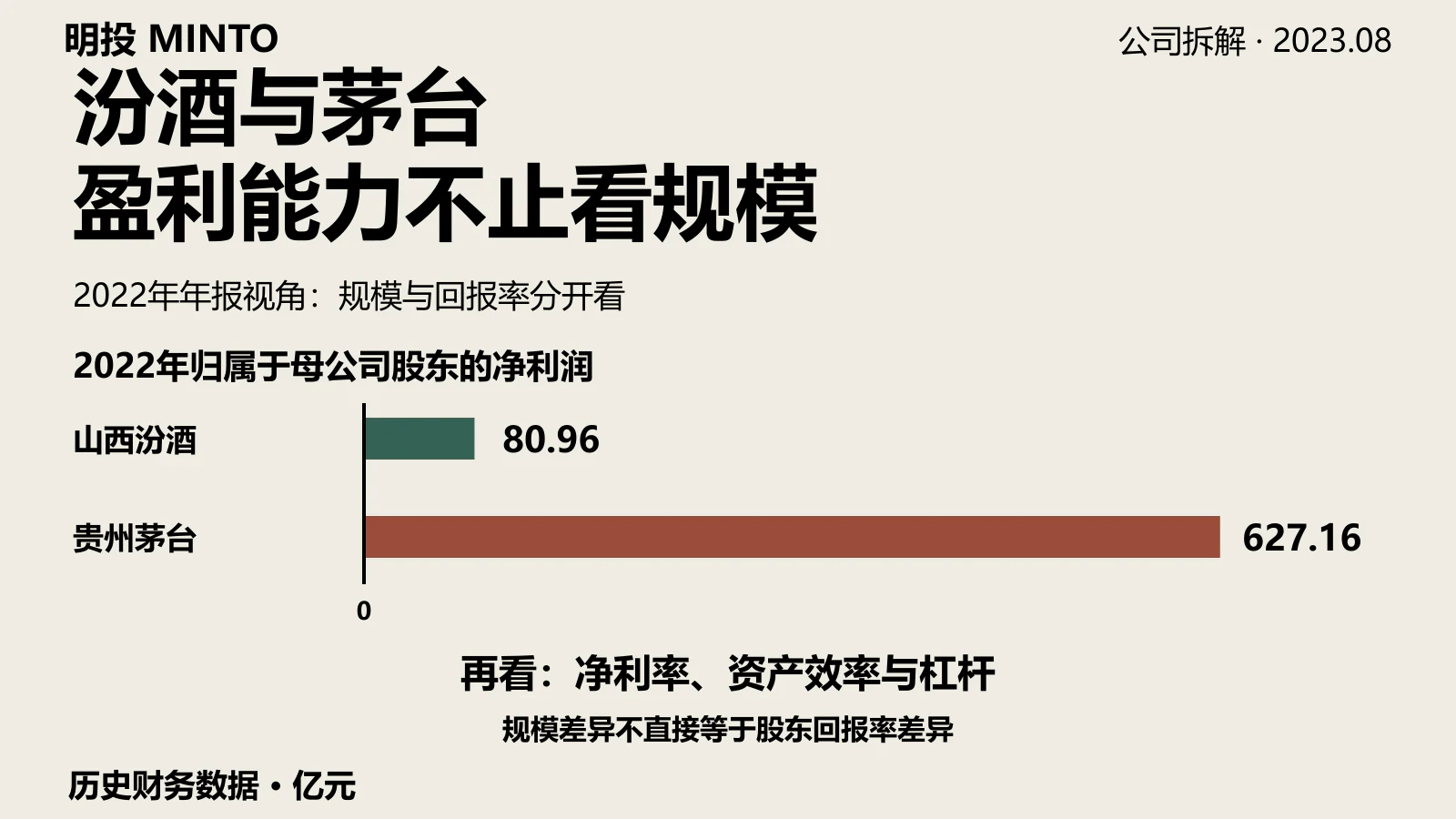
茅台的利润率更高,汾酒2022年的净资产收益率更高。两个指标衡量的回报不同:利润率回答收入留下多少利润,ROE还受资产周转和股东权益规模影响。把这些因素拆开,才能看清白酒企业的赚钱方式。
以下财务比较以两家公司2022年年报为基础,消费和政策观察截至2023年8月13日。公司长期盈利能力、渠道动销和股票买入价格需要分别判断,不能用其中一项替代另外两项。
营收和利润的增长要分开看
山西汾酒的股票代码是600809.SH,贵州茅台是600519.SH。按各年度报告披露的合并口径,2010年至2022年,两家公司营业收入和归母净利润都明显增长。下表金额统一为人民币亿元。
| 指标 | 山西汾酒 | 贵州茅台 |
|---|---|---|
| 2010年营业收入 | 30.17 | 116.33 |
| 2022年营业收入 | 262.14 | 1,241.00 |
| 营业收入期末/期初 | 8.69倍 | 10.67倍 |
| 营业收入年复合增长率 | 19.74% | 21.81% |
| 2010年归母净利润 | 4.94 | 50.51 |
| 2022年归母净利润 | 80.96 | 627.16 |
| 归母净利润期末/期初 | 16.37倍 | 12.42倍 |
| 归母净利润年复合增长率 | 26.23% | 23.36% |
复合增长率按12个年度间隔计算,即“(2022年金额÷2010年金额)的十二次方根-1”,采用年报原始金额计算后再四舍五入。“期末是期初的16.37倍”与“增长16.37倍”不是同一含义;前者对应累计增幅约1,537%。
图:据两家公司2010、2022年报告原始金额重绘;只比较两个年度端点,不表示中间每年的增长路径。
茅台2022年营业总收入为1,275.54亿元,其中营业收入为1,241.00亿元,另有财务公司利息收入。本文增长表采用营业收入,不能把营业总收入混入同一列,也不能把50.51亿元和627.16亿元归母净利润写成营收。合并范围和业务结构在长时期内也可能变化,端点增长不等于同店增长。
汾酒这段时期的利润复合增速高于营收增速,说明利润增长还包含利润率改善等因素。茅台的规模和利润金额更大,但规模更大并不自动对应更高的增长率或股票投资回报。
高利润率不等于更高的ROE
按2022年合并利润表计算,两家公司毛利率均较高。下表将归母净利润占营业收入的比重单独列出,避免与包含少数股东损益的合并净利率混用。
| 2022年指标 | 山西汾酒 | 贵州茅台 |
|---|---|---|
| 毛利率 | 75.36% | 91.87% |
| 归母净利润÷营业收入 | 30.88% | 50.54% |
| 年报加权平均ROE | 44.74% | 30.26% |
毛利率按“(营业收入-营业成本)÷营业收入”计算。茅台的归母净利润还包含财务公司等合并业务的贡献,因此上述比率是公司报表指标,不能直接推断每卖一瓶酒的净利润,也不能据此认定某一款产品的盈利水平。ROE衡量账面股东权益的回报,也不等于持有股票的投资收益率。
杜邦分析把回报拆为利润、周转和权益乘数。为保持分子、分母一致,本文以归母净利润和平均归母股东权益计算简单平均口径的ROE:
ROE=归母利润率×总资产周转率×归母权益乘数。
- 归母利润率=归母净利润÷营业收入。
- 总资产周转率=营业收入÷平均总资产。
- 归母权益乘数=平均总资产÷平均归母股东权益。
这里的平均值均为期初、期末金额的简单平均,三项相乘后等于“归母净利润÷平均归母股东权益”。这套计算用于解释驱动因素,与年报按监管规则披露的加权平均ROE有所区别,不能把两种口径拼成一条序列。
| 2022年杜邦分解 | 山西汾酒 | 贵州茅台 |
|---|---|---|
| 归母利润率 | 30.88% | 50.54% |
| 总资产周转率 | 0.787次 | 0.487次 |
| 归母权益乘数 | 1.824倍 | 1.316倍 |
| 简单平均口径ROE | 44.31% | 32.41% |
三项采用未舍入数值相乘,结果再保留两位小数。茅台较高的利润率,配合较低的资产周转率和权益乘数,形成了与汾酒不同的回报结构。这里的权益乘数反映资产与股东权益的比例,不是偿债能力评分;股东权益也不只有股本,还包括资本公积、留存收益等。
若进一步采用五步杜邦法,可把合并净利润口径的ROE拆为税负、利息负担、息税前利润率、周转和杠杆:税后净利润÷税前利润,乘以税前利润÷EBIT,再乘以EBIT÷营业收入、营业收入÷平均总资产、平均总资产÷平均全部股东权益。该口径包含少数股东,不能直接替换前面的归母口径。季节性、分红时点、会计政策和合并范围变化,也会影响比较结果。
汾酒的利润率改善,需要和周转一起看
汾酒2022年营业收入同比增长31.26%,归母净利润同比增长52.36%。归母利润率由2021年的26.61%升至30.88%;简单平均口径的总资产周转率由0.803次变为0.787次,权益乘数由1.989倍降至1.824倍。利润率上升抵消了后两项下降,简单平均ROE从42.51%升至44.31%。
年报披露的加权平均ROE则是42.04%升至44.74%,增加2.70个百分点。两组数字各有定义,解释变化时需要沿用同一口径。
年报披露,中高价酒类收入增长39.45%,省外主营收入增长36.35%。产品结构和市场拓展为盈利改善提供了更具体的经营依据。不过,厂家确认收入不等于消费者已经喝掉这些酒,终端需求还要看经销商库存、回款和批价,不能仅凭利润率推断整个白酒市场繁荣。
汾酒2022年末合同负债为69.08亿元,2021年末为73.76亿元。其资产负债率下降也不能简单解释为少借了钱:合同负债主要对应已收款、尚未履约的销售义务,与银行借款的经济含义不同。经营活动现金流量净额为103.10亿元,高于当年归母净利润,但现金流与利润的比较仍要考虑预收款及纳税时点。
茅台的存货不能直接解释成产能或涨价
茅台2022年归母净利润同比增长19.55%,年报加权平均ROE由29.90%升至30.26%,增加0.36个百分点。期初、期末权益简单平均口径下的2022年ROE为32.41%,它不能与另一口径的指标混用。
2022年末茅台存货账面价值由333.94亿元增至388.24亿元。年报存货注释列有原材料、在产品、库存商品和自制半成品;酒类生产的贮存环节会占用资金。账面存货增加,既不是固定资产投资收入,也不能单独证明产能扩大、销量低于产量或渠道积压。产能要看基酒产量、建设项目及投产时间,渠道库存则需要经销商和终端数据。
即便部分基酒需要长期贮存,也不能推导出库存没有风险、成品酒放得越久必然越值钱。公司的存货计量仍受成本与可变现净值孰低原则约束,最终变现取决于产品、保存条件、品牌需求和销售渠道。
茅台2022年经营活动现金流量净额为366.99亿元,同比下降42.68%。年报将主要原因指向财务公司吸收存款减少、不可提前支取的同业定期存款增加,不能据此直接认定卖酒回款同比下降42.68%。读酒企的利润和现金流,要把合并报表里的金融业务一起考虑。
白酒也有需求和渠道周期
白酒行情与政策、消费恢复、企业业绩有联系,但政策出台、收入确认和股价上涨并非同步发生,产能扩张也可能在需求转弱时增加供给压力。
2012年12月4日通过的八项规定包括简化接待、不安排宴请等要求。2018年促进消费实施方案的文件日期是9月24日,中国政府网于10月11日公布;文件针对广泛消费领域,不能直接等同于对白酒的专项刺激。政策影响行业需求的程度和持续时间仍需结合实际消费结构判断。
历史股价比较还要处理分红、送转和复权。不能将不同图上的“2010年价格”与后来未复权价格直接相除,再称为投资者的完整收益。行业指数的起止日期、指数代码和收益口径也必须一致;缺少这些条件的涨幅数字,不适合用来论证下一轮上涨的空间。
2023年消费恢复,仍不能代替动销验证
国家统计局2023年7月17日发布的上半年数据支持消费恢复,但不同指标的恢复幅度并不一致。以下均为同比增速,累计数据与6月单月数据分列。
| 指标 | 2023年上半年 | 2023年6月 |
|---|---|---|
| 社会消费品零售总额 | 8.2% | 3.1% |
| 商品零售 | 6.8% | 1.7% |
| 餐饮收入 | 21.4% | 16.1% |
| 城镇消费品零售额 | 8.1% | 3.0% |
| 乡村消费品零售额 | 8.4% | 4.2% |
餐饮恢复为宴席等消费场景提供条件,但餐饮收入增长不能直接当作白酒销量增速。社零同比也受上年基数影响,单月同比放缓不等于当月消费额相对上月同幅度下降。
上半年全国居民人均可支配收入为19,672元,名义增长6.5%,扣除价格因素实际增长5.8%;名义增速比一季度快1.4个百分点。这是上半年累计数据,不是6月单月收入增速。收入改善有助于消费能力恢复,但消费意愿和不同价位酒的需求仍要分别观察。消费者信心指数的单位是指数点,不是百分比,缺少完整序列时也不能断言已经形成稳定回升趋势。
国务院办公厅于2023年7月28日印发、7月31日公布恢复和扩大消费措施,覆盖汽车、居住、服务消费等领域。政策为需求恢复创造条件,具体酒企能否受益,还要通过旺季动销、渠道库存和批价验证。
截至本文研究时点,茅台已经公布2023年半年报:营业总收入709.87亿元,同比增长19.42%;营业收入695.76亿元,同比增长20.76%;归母净利润359.80亿元,同比增长20.76%。三个指标需分别标明,不能统称“营收710亿元”后与营业收入增速混用。茅台的表现也不能代替对所有白酒企业的判断。
技术形态只是一种当时的观察
图:恢复原存档截图,来源为同花顺;画面选中日期为2023年7月25日,不是2023年8月13日的新行情。趋势线和波浪划分属于当时的技术判断,不构成上涨概率的统计证据。
原来的思路是观察指数是否突破下降通道和60日移动平均线,并结合基本面判断调整是否结束。突破可以成为跟踪信号,却不能单凭一次上涨认定第三浪已经成立。若价格重新跌回突破区域、旺季动销没有改善,原有反弹判断就需要重估。
人民币汇率和北向资金可以作为辅助观察变量,但资金流动还受利差、风险偏好、估值和全球资产配置影响。没有同一时段的数据检验,不能将汇率、外资买入和白酒上涨写成确定的因果链。
配置判断要有价格和业绩条件
白酒的品牌、社交消费和渠道经营可以支持部分头部公司的盈利能力,但消费习惯不会永远不变。年轻消费者选择、商务与宴席需求、居民购买力和健康意识,都可能影响产品结构和长期需求,不能把主观偏好直接写成全行业的确定趋势。
世界卫生组织在2023年1月发布的说明指出,酒精具有依赖性并有致癌风险,这不限于白酒,也不取决于饮品价格高低。“软性成瘾”不适合作为低风险的描述;健康风险不自动等于某家酒企次年收入下降,但它是长期需求判断不能回避的因素。
截至2023年8月13日,原研究对消费恢复和头部酒企持谨慎乐观看法。这个判断的条件是:旺季终端销售改善,经销商库存压力缓解,批价和回款能够支持公司的收入与利润。若厂家的增长主要依赖压货、批价继续承压,或利润增长无法转化为现金,配置逻辑就需要重新评估。
仅凭板块已经调整较久,无法认定估值处于低位或当下是较好的买入时点。还需给定当时股价、盈利口径、合理增长预期及估值区间。对高端和次高端公司的关注应落在这些证据上,不宜将“护城河较深”写成业绩或股价的确定性保证。
资料来源
- 山西汾酒2010年年度报告,主要会计数据与合并报表。
- 贵州茅台2010年年度报告摘要,主要会计数据与合并利润表。
- 山西汾酒2022年年度报告,主要指标、产品与地区收入、合同负债及合并报表。
- 贵州茅台2022年年度报告,主要指标、财务公司现金流说明、合并报表与存货注释。
- 贵州茅台2023年半年度报告,2023年8月3日公布。
- 国家统计局:2023年上半年社会消费品零售总额增长8.2%,2023年7月17日。
- 国家统计局:2023年上半年居民收入和消费支出情况,2023年7月17日;同期收入数据解读,7月18日。
- 八项规定原文,2012年12月4日审议通过;2018年促进消费实施方案,国办发〔2018〕93号。
- 国务院办公厅转发恢复和扩大消费措施,国办函〔2023〕70号,2023年7月28日印发、7月31日公布。
- WHO:No level of alcohol consumption is safe for our health,2023年1月4日发布,引用其酒精依赖性与致癌风险结论。
- 原存档同花顺技术截图,画面日期为2023年7月25日;仅作为历史观点的图示,不代替官方行情序列或基本面证据。
更正记录(2026年10月4日)
保留2023年8月13日发表日期与研究时点。修正汾酒股票代码、茅台利润误写为营收、金额单位和复合增长率;区分营业总收入与营业收入,以及简单平均和加权平均ROE。补齐资料来源、重绘可复核的利润增长图,恢复并注明历史技术截图日期。未恢复刻度错误或口径不明的旧财务图,撤回无法复算的长期均值、股价及分段行情涨幅;更正收入累计期间、存货推论和健康表述,并限定估值、反弹和配置判断。正文不加入发表后业绩或行情来改写当时观点。


专注投资分析、市场洞察与资产配置。不追短期波动,只理解真正驱动长期回报的东西。